
The Locus of Control Paradox: Why I Stopped Trying to Save the World
The Locus of Control Paradox: Why I Stopped Trying to Save the World
What I chose to control, and what I stopped pretending I could.
I used to carry the weight of everything.
Climate. Democracy. The economy. The moral state of industries I don't work in and countries I've never visited. I consumed news like it was my job. I had opinions about situations I couldn't influence if I dedicated my entire remaining lifespan to them.
I was informed. I was engaged. I was also anxious, scattered, and increasingly useless at the things directly in front of me.
This isn't a piece about why you should tune out. It's about what happened when I stopped confusing concern with contribution.
The Smart People Drowning
I watched a pattern for years. Intelligent, capable people, frozen. Not because they lacked ability. Because they'd been convinced that every problem was their problem.
Gregg Hurwitz, who studies radicalization for a living, describes a mechanic he's observed: people who feel powerless over their immediate circumstances often find meaning in abstract crusades. It's easier to feel righteous about global injustice than to fix the relationship with your brother. The crusade is noble. The brother is complicated.
C.S. Lewis captured something similar in The Screwtape Letters. A senior demon advises his apprentice on how to corrupt a human: get him obsessing over his mother's soul while ignoring her arthritis. Let him feel spiritually engaged while remaining practically useless to the person in front of him.
It's a devastating insight. You can be so busy caring about everything that you stop caring for anyone.
I recognized myself in that pattern. I was tracking geopolitical developments I couldn't influence while my actual sphere of influence went underutilized. I was informed about systemic problems while ignoring fixable ones within arm's reach.
The Algorithmic Trap
Here's what I've come to believe: the outrage isn't accidental. It may not be intentionally malicious, but it's structurally inevitable.
The algorithms that curate your attention have one job: keep you engaged. Fear engages. Anger engages. Righteous indignation engages beautifully.
What doesn't engage: slow progress on local problems. Quiet wins in your family. Boring competence at work that compounds over years. These things don't generate clicks, so they don't get amplified.
The result is a distorted view of where your energy should go. The feed serves you global problems calibrated to provoke emotional response. Your actual life, where you have leverage, feels small by comparison. So you return to the scroll.
I'm not claiming conspiracy. I'm observing incentives. Attention platforms make money when you stay. Content that produces anxiety keeps you checking. The business model and the paralysis are connected.
Gallup's research on stress and worry shows negative emotions at sustained highs globally, with Americans experiencing particularly elevated stress compared to global averages. We're the most informed, most connected, most globally aware generation in history. We're also drowning.
What Solzhenitsyn Got Right
Aleksandr Solzhenitsyn survived the Soviet gulag. He understood systems of oppression better than most humans who've ever lived. And his conclusion wasn't "organize against the machine." It was something smaller and harder.
"The line separating good and evil passes not through states, nor between classes, nor between political parties either, but right through every human heart."
The work, he argued, starts inside. Not because systemic problems don't exist. They do. But because you can't contribute to solving them if you're broken internally. And internal brokenness isn't fixed by external crusades. Often, the crusades make it worse.
I'm not comparing my comfortable American life to gulag survival. The point is narrower: even someone who experienced genuine systematic evil concluded that the starting point was personal responsibility, not collective rage.
My Sphere of Influence
Here's what I actually control:
How I show up for the people in my life. What I build. How I treat employees and clients. What I teach my daughter. How I respond when things go wrong. Whether I keep commitments. How I spend my hours.
Here's what I don't control:
Policy outcomes. Other people's beliefs. Global economic forces. What happens in countries I've never visited. How strangers on the internet behave. What the algorithm wants to show me.
I have opinions about things in the second category. Some of those opinions are probably right. But opinions without leverage are just noise. And time spent generating noise is time not spent on the things I can actually move.
So I made a choice. Not a permanent one. Not a rigid one. But a directional choice about where attention goes.
I stopped tracking every crisis. I started tracking what I could fix. I stopped debating strangers online. I started building things. I stopped feeling responsible for outcomes I can't influence. I started taking responsibility for the ones I can.
The anxiety didn't disappear. But it shifted from diffuse and paralyzing to specific and actionable.
What Changed
When I narrowed focus, capacity expanded.
I built products I'd been circling for years. I deepened relationships I'd been neglecting. I got better at the actual craft of my work instead of consuming content about abstract problems. (I've written before about how building with AI taught me the same lesson: when you have a clean feedback loop, you notice your own patterns faster.)
None of this required becoming uninformed or uncaring. I still know what's happening in the world. I still have values about how things should be. But I stopped letting macro awareness crowd out micro action.
There's a paradox here that took time to understand: the people who actually change things, the ones with outsized impact, they aren't scattered across every cause. They're focused. They chose a domain and went deep. They built specific leverage and deployed it against specific problems.
Diffuse concern signals virtue. Concentrated effort produces results.
The Invitation
I'm not telling you what to do. I don't know your situation. Maybe your sphere of influence is larger than mine. Maybe your engagement with global issues produces actual outcomes. Maybe you have leverage I don't.
What I'm offering is a question worth sitting with: Where do you actually have influence, and is that where your attention goes?
Most people, when they answer honestly, find a mismatch. They're spending significant mental energy on things they can't move while problems they could fix go unaddressed. Not because they're irresponsible. Because the information environment is designed to create exactly that pattern.
Sphere of Influence Audit
Map where your mental energy actually goes, then identify one fixable thing
Part 1: Where Does Your Mental Energy Go?
Rate how often you spend mental energy on each (1 = Never, 5 = Constantly)
Part 2: What's Fixable in Your Sphere?
Select any that exist in your life right now
This exercise won't solve global problems. Neither will anything else you're likely to do this week. But it might clarify where you have actual leverage. And clarity about leverage tends to produce better outcomes than anxious awareness of everything.
What I'm Not Saying
I'm not saying global problems don't matter. They do.
I'm not saying you should become a nihilist or tune out entirely. Information matters. Participation matters.
I'm not saying everyone should adopt my exact approach. People with platforms, political access, or specific expertise have different calculations than I do.
I'm saying this: For most of us, most of the time, the biggest impact we'll have is in the room we're standing in. Not because we're small. Because that's how influence actually works. It compounds outward from direct contact, not inward from abstract concern.
The person who transforms their family, builds excellent things, treats people well, and contributes to their immediate community has done more than the person who spent those same hours doom-scrolling about problems they can't touch.
The Open Hand
I wrote this with some hesitation. It's easy to read a piece like this as a prescription. "John says ignore global issues and focus on yourself." That's not the message.
The message is: I noticed I was drowning. I noticed smart people around me drowning the same way. I traced it to a mismatch between where attention went and where leverage existed. I made an adjustment. Things got better.
Maybe your situation is different. Maybe you have leverage where I don't. Maybe you've found a way to be globally engaged without the paralysis.
If so, teach me. I'm still figuring this out.
But if you recognize the pattern I described, if you feel scattered across problems you can't move while ignoring ones you could, then maybe the same adjustment is worth trying.
Start small. Find one fixable thing in your immediate sphere: the conversation you've been avoiding, the process at work that everyone complains about, the commitment you keep breaking. Fix it. Notice what that does to your sense of agency.
Then decide what comes next.
FAQ
Isn't this just privilege talking? Some people can't ignore systemic issues because they're directly affected.
Fair point. If you're experiencing direct harm from systemic problems, your calculation is different. This piece is aimed at people (like me) who consume global crisis content out of a sense of duty rather than direct necessity, and find themselves paralyzed rather than mobilized. If your engagement is producing action, keep going. If it's producing anxiety without action, that's worth examining.
How do I stay informed without getting sucked back into the scroll?
I batch information intake. I check headlines once a day, from one trusted source, for ten minutes. I avoid algorithmic feeds designed to hold attention. I ask myself before consuming: "Will this change what I do today?" If no, I close the tab. It's not about ignorance. It's about intentionality.
What about voting and civic participation? Isn't that where individuals affect big systems?
Yes. Vote. Participate in local government if you're able. But notice: these are discrete actions with clear endpoints. They're different from ambient anxiety about global events. The person who votes, volunteers for a local cause, and then returns to their productive work is doing something different than the person who doom-scrolls for hours, votes once, and calls it engagement.
Get insights on building with clarity
Frameworks for focus and execution. No outrage, no doom. Just what works.
No spam. Unsubscribe anytime.
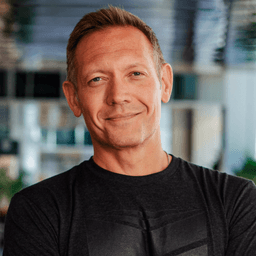
John Vyhlidal
Founder & Principal Consultant
Military, Big 4, Fortune 500. 20+ years building systems that turn strategy into results. Now helping mid-market executives navigate complexity.